
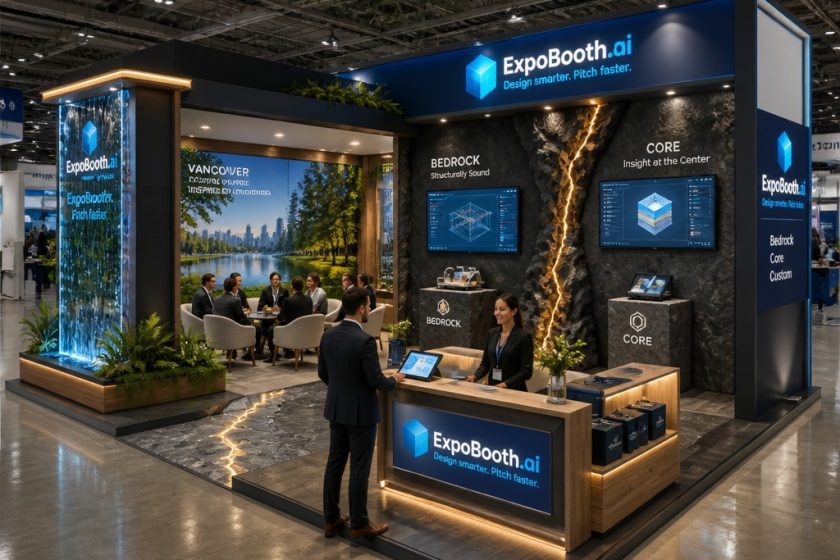
Exhibition Booth Design for Sustainability: Practical Choices That Still Look Premium
Sustainability has become a default question in exhibition briefs — but most teams still treat it like an add-on (“Can we make it greener?”) rather than a design input that shapes the concept from day one.
The problem: a lot of “sustainable” booths end up looking temporary, under-designed, or compromised. And nobody wants a stand that signals cost-cutting when the goal is to signal credibility.
This article is a practical guide to designing sustainable exhibition booths that still look premium, feel on-brand, and work for lead generation — with choices that agencies, exhibitors, and stand builders can actually implement.
Why sustainability is now a design constraint (not a marketing line)
Clients are being pushed by:
- Internal ESG targets and procurement requirements
- Brand reputation (especially in public-facing industries)
- Rising material and logistics costs
- Pressure to reuse assets across multiple shows and regions
So the winning approach isn’t “use less” — it’s design smarter: modularity, reusability, and content that carries the brand without needing a one-off build every time.
The sustainability pyramid (what matters most)
If you want the biggest impact without killing the design, prioritise in this order:
- Reuse / modularity (design for multiple shows)
- Material choices (lower-impact, recyclable, responsibly sourced)
- Logistics (shipping volume, weight, local build partners)
- Energy + operations (lighting, screens, power draw)
- End-of-life plan (what happens after the show)
Most teams jump straight to materials, but reuse beats everything.
8 practical design moves that improve sustainability (and the pitch)
1) Design a modular “kit of parts”
Instead of designing a one-off sculpture, design a system:
- Reusable frames
- Interchangeable cladding
- Reconfigurable zones (demo, meetings, reception)
- Content surfaces that can be reskinned
Premium tip: A modular system can still look bespoke if the composition and lighting are intentional.
2) Make graphics and content do more of the heavy lifting
If the structure is reusable, the brand expression comes from:
- Fabric lightboxes
- Tension graphics
- LED content loops
- Reusable signage elements (with changeable inserts)
This is often cheaper and more sustainable than rebuilding physical features each time.
3) Reduce “dead weight” features
Ask: does this element drive attention, understanding, or action?
Common culprits:
- Overbuilt storage walls
- Heavy decorative ceilings
- One-off scenic features that don’t support the story
Replace with lighter, reusable features that still create a strong silhouette.
4) Choose materials that travel well
Sustainability isn’t just what something is made of — it’s how often it gets replaced because it arrives damaged.
Prioritise:
- Durable finishes
- Scratch-resistant surfaces
- Components that can be swapped individually (not full panels)
5) Build for disassembly (and fast rebuild)
If it’s hard to assemble, it’s hard to reuse.
Design for:
- Standard fixings
- Clear component labelling
- Repeatable build steps
- Minimal specialist tools
This reduces labour time, errors, and waste.
6) Optimise lighting (big impact, big perception)
Lighting is one of the highest “premium-per-pound” levers.
- Use efficient LED fixtures
- Light the brand moments (not everything)
- Create contrast and depth with fewer fixtures
A well-lit booth looks more premium even with a simpler structure.
7) Plan for multi-show adaptability
A sustainable booth should be able to evolve:
- Different stand sizes (6×3, 6×6, 9×6, island)
- Different open sides
- Different messaging per show
Design the concept like a product platform, not a one-off campaign.
8) Make sustainability visible (without being preachy)
If sustainability is a selling point, show it in a credible way:
- “Designed for reuse across X shows”
- “Modular system reduces rebuild waste”
- “Local build partners reduce shipping”
Keep it factual. Avoid vague claims.
What to include in a “sustainable booth” brief (copy/paste section)
If you want agencies and builders to deliver the right solution, add this to the brief:
- Target number of reuses (e.g., 4–6 shows)
- Expected stand sizes and open sides
- What must be replaceable (graphics, content, cladding)
- Storage and shipping constraints (crates, weight, volume)
- Any required material standards or supplier policies
- End-of-life plan (reuse, recycle, donate, refurb)
Where ExpoBooth.ai fits
Sustainable booth design benefits massively from fast iteration, because the best solution is usually a balance of:
- Premium look
- Reuse logic
- Content surfaces
- Budget and build constraints
ExpoBooth.ai helps teams explore that balance quickly by generating and iterating booth concepts from briefs, moodboards, sketches, or CAD — producing multi-angle renders and variations fast, with human oversight to keep outputs credible and on-brand.
The takeaway
Sustainable doesn’t have to mean “simpler” or “less impressive”.
Done properly, sustainability pushes you towards modular, repeatable, content-led design — which often results in booths that are easier to sell internally, easier to build, and easier to scale across a full events calendar.